
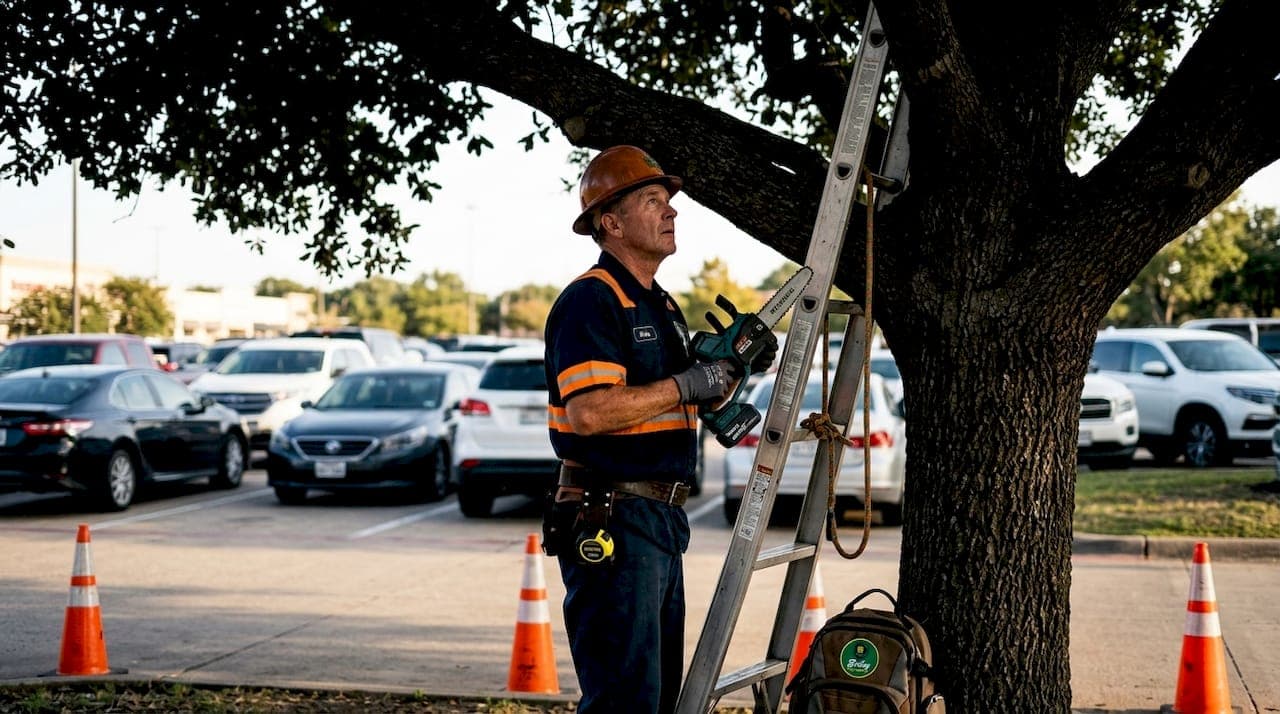
Parking lot tree trimming is the practice of removing dead, overgrown, or structurally weak branches from trees in commercial parking areas to protect people, vehicles, and infrastructure. Property managers who skip this maintenance expose their businesses to falling limb hazards, pavement damage, and legal liability. Industry professionals, including ISA-certified arborists, classify routine pruning as a core safety and compliance task. Physical tree trimming accounts for 35.8% of all utility vegetation management market activity. That figure reflects how central trimming is to any serious property maintenance program.
Why parking lot trees need trimming for safety
Untrimmed parking lot trees create a predictable set of hazards. Falling branches are the most immediate risk. A single storm can send a heavy limb through a windshield or onto a pedestrian, and the liability that follows is significant. ISA-certified arborists recommend a vertical clearance of 8–12 feet above vehicles and walkways as the baseline safety standard. Properties that fall below that threshold are operating outside accepted professional guidelines.
Visibility is the second major concern. Overgrown canopies block sightlines for drivers backing out of spaces and for pedestrians crossing traffic lanes. Low-hanging branches also obscure lighting fixtures, creating dark zones that increase the risk of both accidents and crime after hours.
Root damage is the third hazard, and it is often the most expensive to fix. Overgrown tree roots are a primary cause of asphalt pavement failure in parking lots. Roots push up through the surface, creating uneven pavement that becomes a trip hazard and accelerates the need for costly repaving. Monitoring for pavement heaving near tree bases is a standard part of any responsible inspection routine.
- Falling branches during storms or high winds cause vehicle and personal injury
- Canopy obstruction blocks lighting and driver sightlines
- Root uplift damages asphalt and creates trip hazards
- Low-hanging limbs reduce clearance for delivery trucks and emergency vehicles
Pro Tip: Walk your parking lot after every major storm and document any branch failures or pavement changes near tree bases. That record protects you legally and helps your arborist plan the next pruning cycle.
How does trimming affect long-term tree health?
Pruning is not purely about removing risk. It also shapes how a tree grows over its entire lifespan. Young trees benefit most from structural pruning, which guides branch architecture before bad habits form. Mature trees require maintenance pruning to remove deadwood, reduce canopy weight, and correct any structural defects that developed earlier.
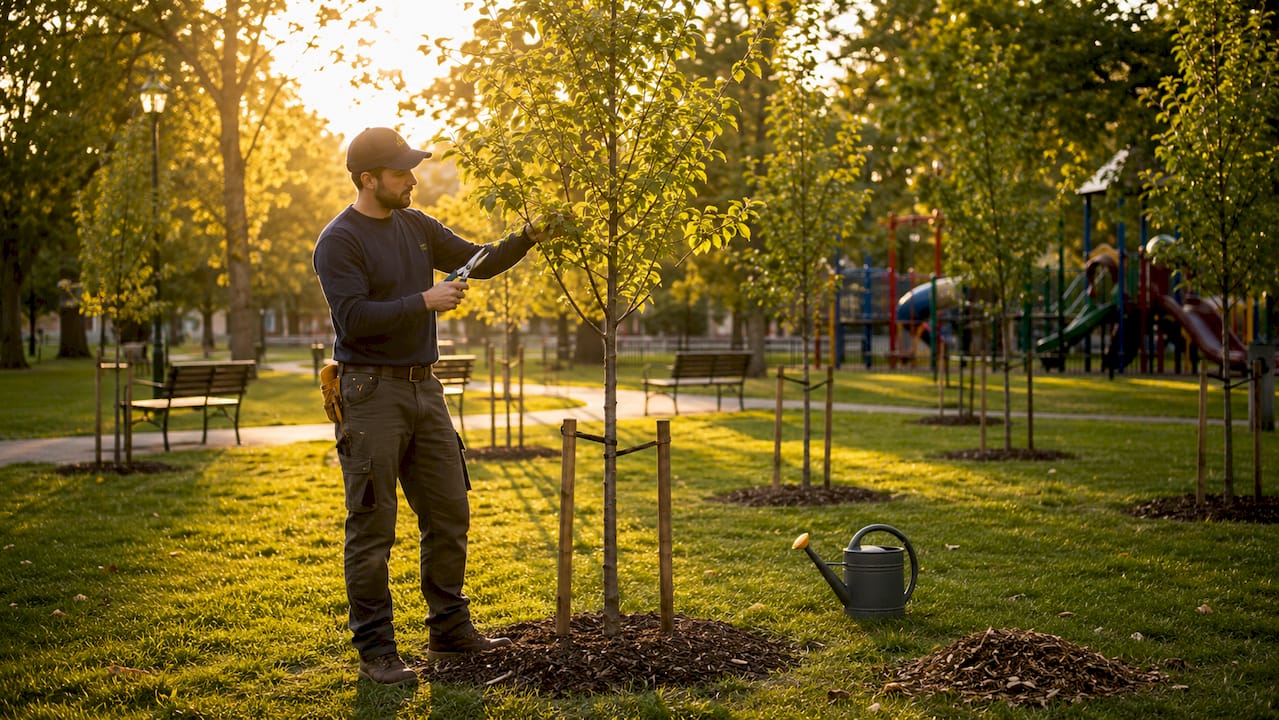
Pruning decreases a tree's photosynthetic capacity, which is the trade-off for reducing risk and guiding form. Removing leaves reduces the tree's ability to produce energy, so every cut must be deliberate. Pruning invigorates individual shoots but reduces total biomass. That means over-pruning weakens a tree even as it appears to stimulate new growth.
Technique matters as much as timing. Incorrect pruning cuts on large limbs cause bark tears that open the tree to fungal infections and decay. The correct method is a section cut at the branch collar, the swollen area where the branch meets the trunk. That cut allows the tree to seal the wound naturally without leaving a stub that rots inward.
- Identify the branch collar before making any cut on a limb larger than 2 inches in diameter.
- Use a three-cut method on heavy limbs: undercut first, then remove the bulk of the limb, then make the final collar cut.
- Avoid flush cuts that remove the collar itself, which destroys the tree's natural defense zone.
- Do not top trees. Topping removes the central leader and triggers weak, fast-growing sprouts that are more likely to fail than the original branches.
- Leave no stubs. Stubs die back and become entry points for disease and insects.
Pro Tip: Branches larger than 4–6 inches in diameter require section cutting by a certified arborist to avoid bark tearing and decay. Do not assign this work to general landscaping crews.
How does regular maintenance protect property value and reduce liability?
Routine pruning is more affordable than corrective or emergency interventions. A scheduled trim every few years costs a fraction of what property managers pay after a storm takes down a large, neglected limb onto a parked car. Emergency removals also carry premium labor rates and often require road closures or crane equipment that drives costs higher.
Liability is the financial risk that most property managers underestimate. A large limb failure over a high-traffic area is a significant legal risk, and proactive pruning is the standard professional practice for reducing duty of care exposure. Courts have consistently held that property owners who fail to maintain known hazards bear responsibility for resulting injuries. Scheduled pruning creates a documented record of due diligence.
Curb appeal is the third financial argument. Well-maintained trees signal that a property is actively managed. That perception affects tenant retention, customer foot traffic, and the overall market value of the asset. A parking lot with healthy, shaped trees reads as a safe and professional environment.
- Scheduled pruning costs less than emergency removal or post-storm repairs
- Documentation of maintenance cycles reduces legal exposure after incidents
- Aesthetic condition of trees directly affects customer and tenant perception
- Pavement integrity is preserved when root growth is managed early
Tree maintenance viewed as proactive asset management reduces long-term expenses and operational disruptions. Property managers who build trimming into their annual maintenance budgets avoid the unpredictable costs that come from deferred care.
What are the best practices for trimming parking lot trees?
Timing is the first variable to control. Late winter or early spring is the best window for trimming most species. Dormant trees show their branch structure clearly without foliage, making it easier to identify deadwood and structural defects. Sap loss is also minimal during dormancy, which reduces stress on the tree.
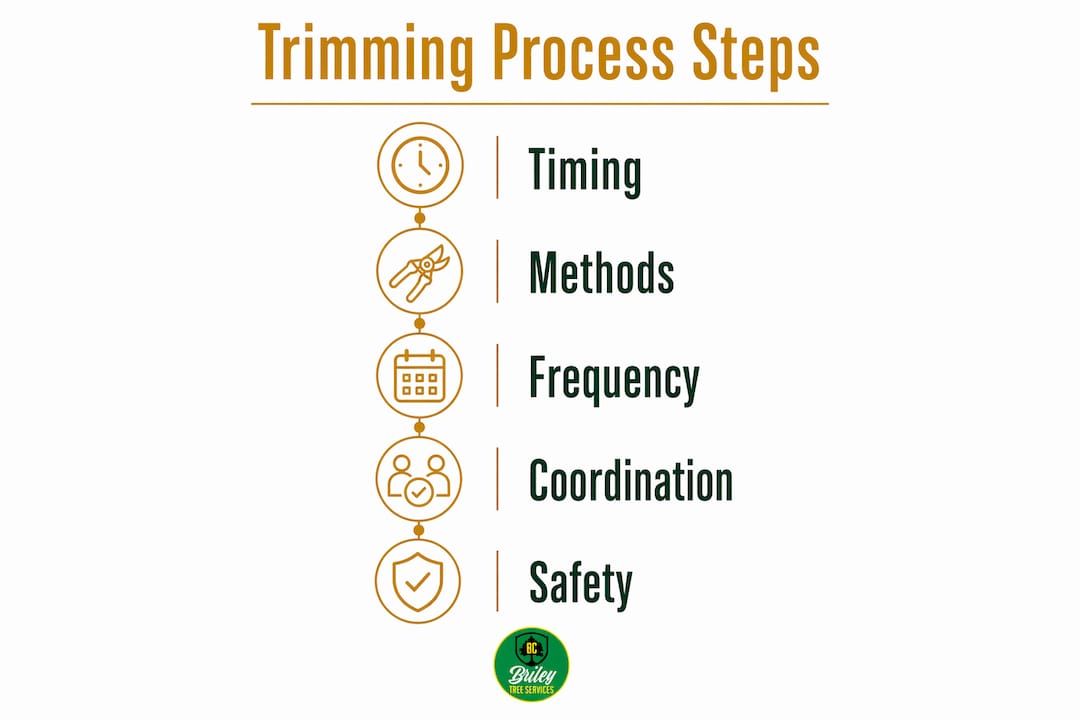
The three primary pruning methods used in commercial parking lots are crown raising, crown thinning, and selective limb removal. Crown raising removes lower branches to achieve the 8–12 foot clearance standard. Crown thinning reduces canopy density to improve light penetration and air circulation, which lowers the risk of wind damage. Selective limb removal targets specific dead, diseased, or crossing branches without altering the overall canopy shape.
| Pruning method | Primary purpose | Best used when |
|---|---|---|
| Crown raising | Achieve vertical clearance | Branches hang below 8 feet |
| Crown thinning | Reduce wind resistance | Canopy is dense and storm risk is high |
| Selective limb removal | Remove deadwood or defects | Specific hazard branches are identified |
| Structural pruning | Guide young tree form | Tree is under 10 years old |
Frequency follows tree age. Most mature commercial parking lot trees require professional pruning every 2–5 years. Young trees need attention every 1–3 years to establish strong structure before they reach full size. Waiting longer than these intervals allows problems to compound and increases the cost of each subsequent service.
Utility line coordination is a non-negotiable step for parking lots near overhead power lines. Trimming near energized lines requires coordination with the utility provider and, in most jurisdictions, a licensed line-clearance arborist. Local regulations vary, so confirm requirements with your municipality before scheduling work near infrastructure. Reviewing commercial tree maintenance best practices before hiring a crew helps property managers ask the right questions and set clear scope expectations.
Understanding professional property maintenance strategies also helps property managers build trimming into a broader scheduled maintenance program rather than treating it as a one-off task.
Key Takeaways
Regular parking lot tree trimming prevents injury, reduces legal liability, and protects pavement integrity while keeping trees structurally sound for the long term.
| Point | Details |
|---|---|
| Safety clearance standard | ISA guidelines require 8–12 feet of vertical clearance above vehicles and walkways. |
| Pruning frequency | Mature trees need trimming every 2–5 years; young trees every 1–3 years. |
| Best trimming window | Late winter or early spring reduces tree stress and improves structural visibility. |
| Liability protection | Documented pruning cycles reduce duty of care exposure after limb failure incidents. |
| Technique matters | Section cuts at the branch collar prevent bark tears, fungal infection, and decay. |
What I've learned from years of watching parking lots get this wrong
Property managers consistently treat parking lot trees as decoration rather than infrastructure. That framing is the root of most problems I see. A tree over a parking lot is a load-bearing element of your property's safety system. When it fails, it fails publicly, expensively, and sometimes with serious injury involved.
The most common mistake is waiting for a visible problem before calling an arborist. By the time a branch looks dead or a root has cracked the asphalt, the tree has been declining for years. Proactive inspections, ideally tied to a preventive tree care plan, catch structural defects before they become emergencies.
The second mistake is hiring general landscaping crews for work that requires certified arborist expertise. Improper cuts on large limbs cause decay that shortens a tree's life by decades. The savings from using an unqualified crew disappear the moment you need an emergency removal that a proper pruning cycle would have prevented.
Scheduling matters more than most property managers realize. Building trimming into a fixed annual or biannual calendar, rather than responding to complaints, keeps costs predictable and documentation consistent. That consistency is also your best legal defense if a limb ever does cause damage.
— Tatum
Brileytreeservice handles commercial parking lot tree care
Parking lot trees require a level of expertise that goes beyond standard landscaping. Brileytreeservice provides professional tree trimming services for commercial properties throughout Shreveport, Bossier City, and Northwest Louisiana, with crews experienced in crown raising, structural pruning, and utility line coordination.
Brileytreeservice works with property managers to build customized pruning schedules based on tree age, species, and site conditions. Every job includes cleanup, and the team shows up on time with the equipment needed to handle large commercial lots safely. Contact Brileytreeservice for a free estimate and get a maintenance plan that keeps your parking lot trees safe, healthy, and compliant with industry clearance standards.
FAQ
Why do parking lot trees need trimming more often than yard trees?
Parking lot trees face higher foot and vehicle traffic, stricter clearance requirements, and greater liability exposure than residential yard trees. The 8–12 foot clearance standard and the density of people and vehicles below the canopy make regular pruning a safety necessity rather than an aesthetic choice.
What is the best time of year to trim parking lot trees?
Late winter or early spring is the best time to trim most species. Trees are dormant, sap loss is minimal, and the bare canopy makes it easier to identify structural defects and deadwood before new growth begins.
How often should commercial parking lot trees be pruned?
Mature trees require pruning every 2–5 years; young trees need attention every 1–3 years. Waiting beyond these intervals allows hazards to develop and increases the cost of each service.
Can overgrown tree roots damage a parking lot?
Yes. Overgrown roots are a primary cause of asphalt pavement failure in parking lots. Root growth lifts and cracks the surface, creating trip hazards and accelerating the need for expensive repaving.
Do I need a certified arborist for parking lot tree trimming?
Any work involving branches larger than 4–6 inches in diameter or trees near utility lines requires a certified arborist. General landscaping crews lack the training to make safe cuts on large limbs, and improper technique causes decay that shortens tree life significantly.