
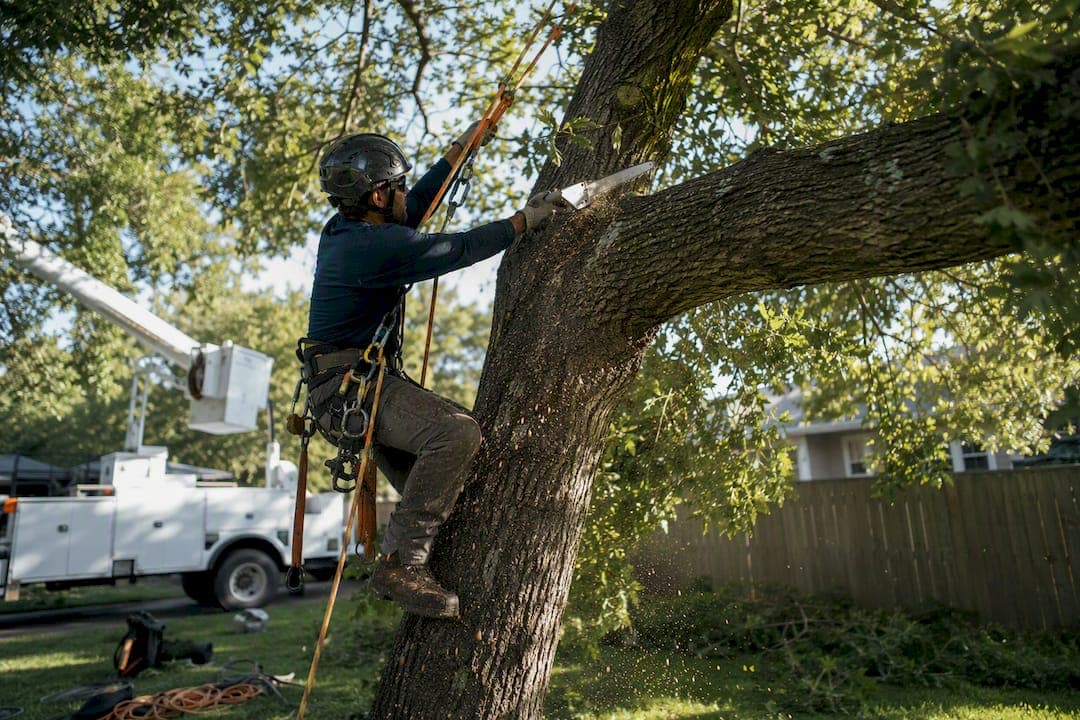
Professional oak tree pruning typically costs a moderate to high range for most residential jobs, with mature oaks often costing toward the upper part of that range depending on size and complexity. Price swings on tree size, access, and how much cleanup the job requires. Get an on-site estimate from an insured arborist before you budget a final number.
TL;DR:
- Larger oaks over 60 feet can cost $1,000 to $1,500 or more, especially if they overhang structures or utility lines, due to increased safety and complexity.
- Access issues, proximity to buildings and power lines, and tree health significantly influence the final pruning cost, with challenging sites adding hundreds of dollars.
- An accurate estimate requires in-person inspection, proof of insurance, certification verification, and detailed scope and cost breakdowns before work begins.
- Regional factors, such as urban tight lots versus rural open spaces, can shift prices, with urban trees often costing more due to limited access and increased risk.
- Budget for an additional 15% for unexpected expenses like debris removal, utility coordination, or extra safety measures during the pruning process.
Table of Contents
- How Much Does It Cost to Prune an Oak Tree by Size?
- What Actually Drives the Price of Oak Pruning?
- When Is the Safest Time to Prune an Oak Tree?
- How Do You Get an Accurate Estimate From an Arborist?
- What Field Experience Tells You About These Numbers
- What I'd Tell a Neighbor Before They Hire Anyone
- Get a Written On-Site Estimate From Briley Tree Service
- Sources
How Much Does It Cost to Prune an Oak Tree by Size?
A small oak in an open yard costs far less to prune than a massive tree leaning over your roofline. Size is the single biggest price driver, but it's not the only one, and the range within each category can be wide once you factor in access and canopy density.
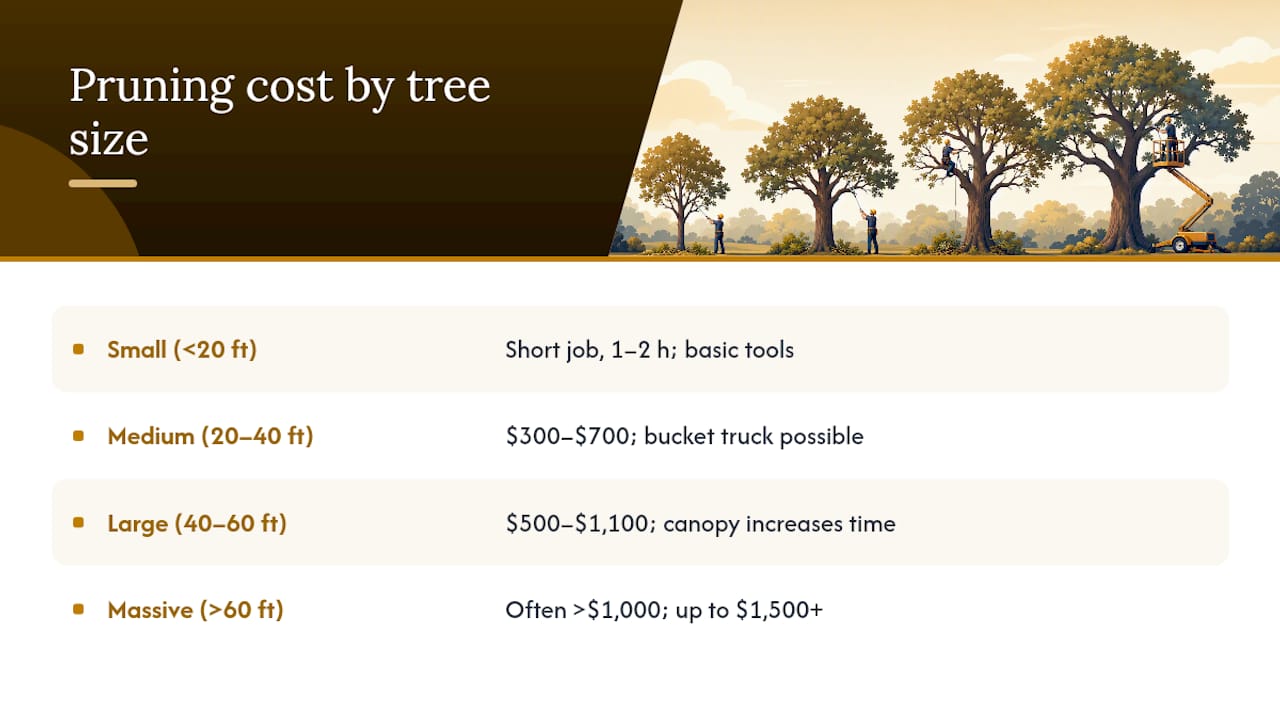
Small oaks under 20 feet tall, often young trees or ornamental varieties, typically cost less to prune. These jobs usually take a single crew member an hour or two with basic hand tools and a chainsaw. There's rarely any need for a bucket truck or rigging equipment.
Medium oaks between 20 and 40 feet land in the $300 to $700 range. This is the most common category for suburban shade trees, and it's where crews start needing a bucket truck or an experienced climber, plus more time for limb removal and cleanup.
Large oaks spanning 40 to 60 feet run $500 to $1,100 on average, according to industry cost data. At this height, canopy spread becomes a real factor. A wide-crowned live oak with limbs stretching 50 feet in every direction takes longer to prune safely than a narrow, upright tree of the same height.
Massive oaks over 60 feet, the kind you find on older properties with century-old live oaks or bur oaks, frequently push past $1,000 and can reach $1,500 or more when the tree overhangs a structure or power line. Several cost guides note that $995 is often considered a fair price for a complex mature oak job, and that figure lines up with what many homeowners in North Louisiana actually pay for a full canopy prune on an established tree.
Labor is usually billed inside a flat per-tree quote, but when crews price by the hour, rates commonly fall between $60 and $125 per hour depending on region and crew experience, per current pricing data. Equipment fees for a bucket truck or wood chipper can add another $50 to $150 to a job, though many companies fold that into the total price rather than itemizing it separately.
Regional differences matter too. Urban properties with tight lot lines, fences, and nearby power lines tend to cost more than rural properties where a crew can park equipment right under the canopy. In parts of North Louisiana, dense residential lots in Shreveport and Bossier City often see quotes at the higher end of these ranges simply because of how close mature oaks sit to houses, driveways, and utility lines.
What Actually Drives the Price of Oak Pruning?
Two oaks of the same height can have wildly different price tags, and the gap almost always comes down to access, structure proximity, and the tree's health. Understanding these drivers helps you read a quote instead of just reacting to the number at the bottom.
Access changes everything about how a crew works. A tree with open ground clearance lets a bucket truck park right underneath, cutting labor time significantly. A tree behind a narrow gate, on a steep slope, or surrounded by landscaping forces the crew into manual climbing, which takes longer and costs more.
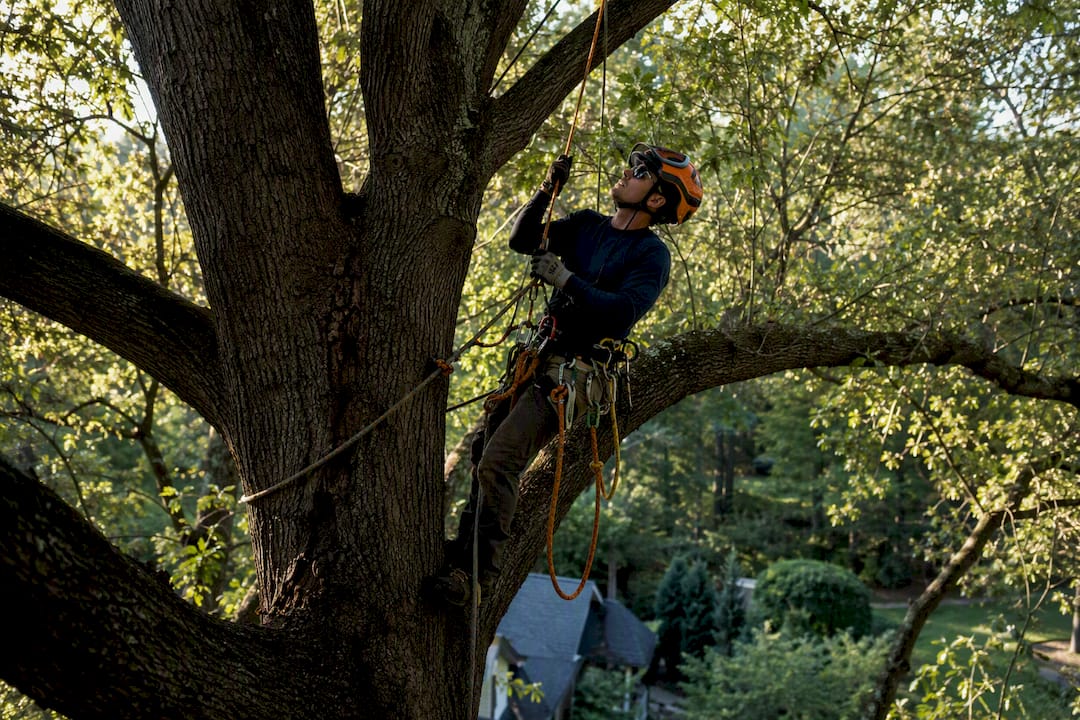
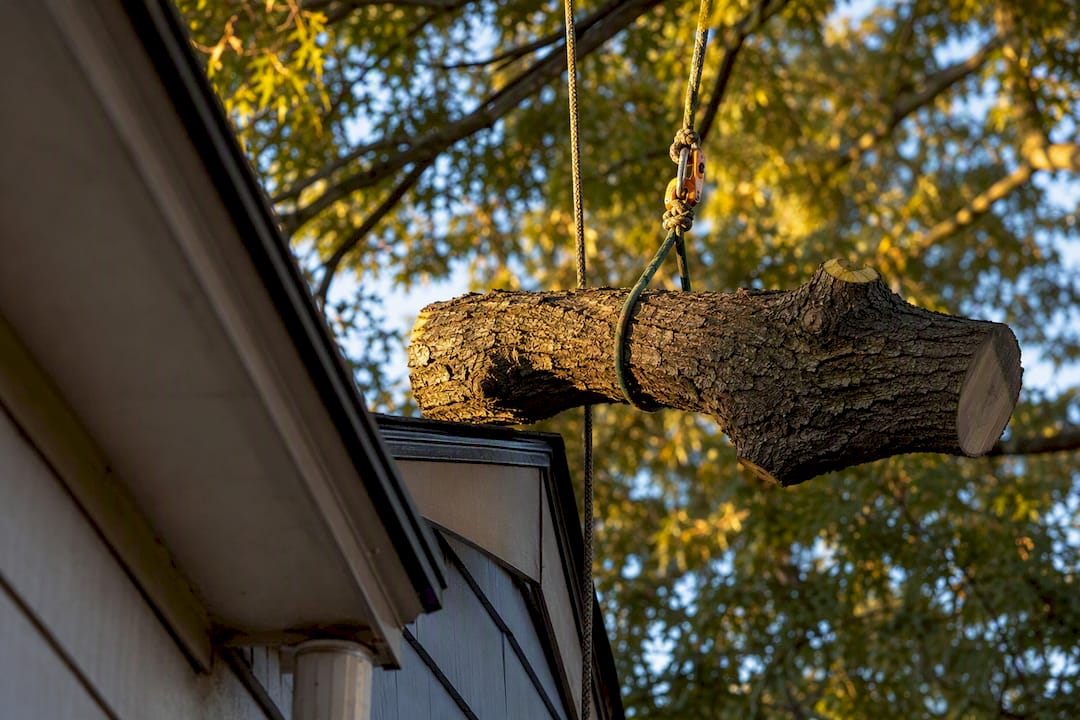
Proximity to structures and power lines raises both risk and price. A limb that can drop straight to the ground is simple. A limb that has to be roped down piece by piece over a roof, patio, or fence takes real time and a skilled hand. Work anywhere near a power line usually requires coordination with the utility company, and that step alone can add days to a timeline and dollars to a quote.
Tree health matters just as much as size. A tree with significant deadwood or storm damage needs careful assessment before a single cut happens, since dead limbs behave unpredictably and often require extra safety measures.
Here's what typically pushes a bid higher:
- Bucket truck access blocked by fences, sheds, or narrow driveways
- Limbs overhanging a roof, pool, or power line requiring roped lowering
- Significant deadwood that needs careful removal rather than a quick cut
- Utility company coordination for lines running through the canopy
- Debris haul-off, which isn't always included in the base price
Pro Tip: Ask upfront whether haul-off is included in the quote. Debris disposal alone can add $100 to $600 on a large oak job because of how much brush a mature tree produces, often filling multiple chip truckloads. A quote that looks cheap on paper can end up costing more once cleanup gets added as a surprise line item.
When Is the Safest Time to Prune an Oak Tree?
Timing isn't just a scheduling question with oaks. It's a health and price question rolled into one. Oak wilt, a fungal disease spread by sap-feeding beetles, poses a real risk during spring and early summer in many parts of the country, and pruning during that window creates fresh wounds that attract the exact insects carrying the disease.
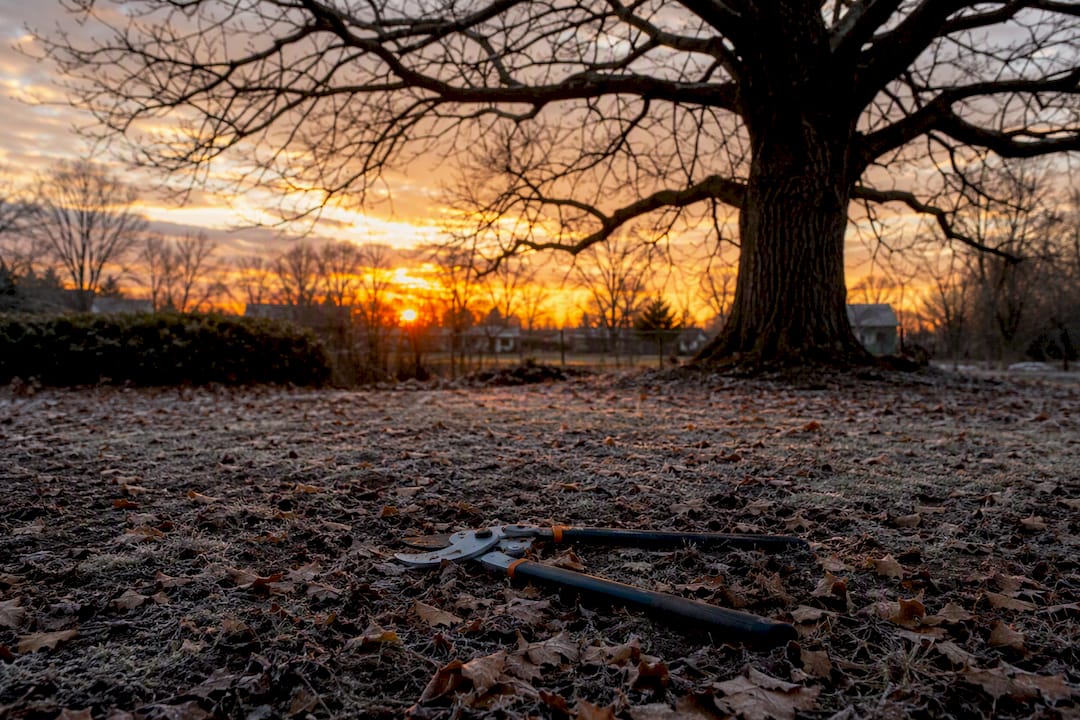
Many arborists follow guidance to avoid non-emergency pruning during high-risk months and recommend scheduling during dormant season instead, according to seasonal pruning research. This isn't just caution for caution's sake. A reputable crew may decline a non-urgent job during peak beetle activity or quote it higher to cover the extra precautions involved, like sealing wounds immediately after cutting.
If a branch is actively hazardous and can't wait for the safer window, insured professionals can still handle it, but they'll typically treat any pruning cuts with wound dressing to reduce infection risk. Emergency storm damage falls into a different category entirely and gets addressed regardless of season, since a cracked limb over your driveway is a bigger threat than a delayed infection risk.
Scheduling routine pruning for late fall through winter, when oaks are dormant, remains the most reliable way to protect tree health and often means better crew availability too.
How Do You Get an Accurate Estimate From an Arborist?
A written, itemized estimate is the difference between knowing what you're paying for and hoping the final bill matches what you expected. Before you sign anything, run through this checklist with every company you call.
- Ask for proof of insurance. A company should carry both liability and workers' compensation coverage, and should hand over documentation without hesitation.
- Verify certification. Look for ISA certification or equivalent credentials, and confirm the crew follows ANSI A300 pruning standards, the industry benchmark for proper technique.
- Get the scope in writing. A real estimate lists exactly which limbs come off, not a vague promise to "clean it up."
- Confirm what's included. Cleanup, haul-off, and stump grinding (if applicable) should be spelled out, not assumed.
- Ask about crew size and equipment. A two-person crew with hand tools moves at a different pace than a four-person crew with a bucket truck.
- Check the timeframe. A same-day quote for a complex job over a roof should raise questions.
- Ask who handles permits. Some municipalities require permits for pruning certain protected or heritage oaks.
- Request a price breakdown. Labor, equipment, and disposal should each be identifiable, even inside a flat quote.
Compare bids on a per-tree basis when possible, since per-hour quotes can be harder to predict and easier to pad. If one company's bid is dramatically lower than the others, that's usually a red flag rather than a deal. Cheap bids sometimes come from uninsured operators or crews planning to top the tree, a shortcut that damages long-term tree health and often costs more to correct later. A homeowner's guide to reading estimates can help you spot the difference between a thorough quote and a rushed one, and understanding tree service liability before you hire protects you if something goes wrong on your property.
What Field Experience Tells You About These Numbers
Briley Tree Service handles oak pruning jobs across Shreveport, Bossier City, and Ruston every season, and the pricing patterns above hold up consistently in the field. A medium oak with clear ground access and no structures nearby often lands near the lower end of its range, while a mature oak with limbs hanging over a roofline pushes toward $1,500 once rigging and careful roping enter the picture.
Tatum, who writes cost guides for the Briley Tree Service blog, has tracked these job types across dozens of estimates. The pattern is consistent: access and structure proximity explain most of the price gap between two oaks of similar size. A tree crew that has priced hundreds of oaks locally can usually spot the true complexity of a job within minutes of walking the property.
What I'd Tell a Neighbor Before They Hire Anyone
Most homeowners fixate on getting the lowest number, and I understand the instinct. But an uninsured crew that underbids a job by $300 can cost you far more if a limb damages your roof or someone gets hurt on your property. Credentials and insurance aren't paperwork. They're the difference between a professional job and a liability sitting in your yard.
Proper pruning also protects the asset itself. A well-maintained oak adds real value to a property; a topped or poorly cut one becomes a hazard and an eyesore within a few years.
My rule of thumb: budget your expected quote plus 15% for surprises like extra debris volume or utility coordination.
— Tatum
Get a Written On-Site Estimate From Briley Tree Service
Briley Tree Service gives you something a lot of quick phone quotes can't: a licensed, insured arborist crew that walks your property, checks access and canopy spread in person, and writes up a real estimate before any cuts happen. That matters most with oaks, where a wrong guess on complexity turns into a much bigger bill mid-job.
We serve homeowners and commercial property owners across Shreveport, Bossier City, Ruston, and the surrounding North Louisiana area, and every estimate breaks down labor, equipment, and disposal so you know exactly what you're paying for before work starts. Permit questions and insurance documentation come standard, not as an afterthought. If you've got an oak that needs attention this season, whether it's routine trimming or storm cleanup, request your free on-site estimate and get a number you can actually plan around.
Sources
- Oak Tree Pruning Cost and Price Ranges for U.S. Properties 2026 – Current Cost
- The Price Of Pruning: Large Oak Tree Trimming Costs | ZacariasTreeServices