
What are the most common DIY tree removal mistakes?
Most homeowners who attempt DIY tree removal run into the same set of problems. The errors are predictable, but the consequences vary. A tree that falls the wrong way can destroy a roof, knock out power, or injure someone. Knowing these mistakes before you pick up a saw is the difference between a clean job and a catastrophe.
Here are the most frequent errors to watch for:
- Underestimating tree size and weight. A mature maple can weigh well over 4,000 pounds. Most homeowners have no frame of reference for the weight impact when that tree hits the ground.
- Skipping a tree health assessment. Rotten or diseased wood is unpredictable. It can snap, split, or fall in the wrong direction without warning.
- Ignoring local permits and regulations. Many municipalities require a permit before any tree comes down. Skipping this step can result in fines or liability for damage.
- Failing to plan the fall direction. Trees rarely fall exactly where you expect. Without a clear plan and a controlled notch cut, the fall zone becomes a guessing game.
- Working near power lines. Any branch within 10 feet of a power line is a fatal electrocution risk. This is not a job for a homeowner.
- Using the wrong tools. A dull handsaw or an unfamiliar chainsaw creates more danger than it solves.
- Cutting in the wrong sequence. Removing the wrong branch first can cause the tree to shift, bind the saw, or fall unpredictably.
- Using a ladder. If you need a ladder to reach a limb, the tree is too large for safe DIY removal.
- Skipping personal protective equipment. No hard hat, no chainsaw chaps, no eye protection. This combination sends people to emergency rooms every season.
- Ignoring weather conditions. Wind changes fall direction. Wet wood is heavier and slippery. Rain makes footing dangerous.
- No emergency plan. No escape route, no first aid kit, no second person on the ground. If something goes wrong, the outcome depends entirely on preparation.
- Improper stump removal. Yanking a stump with a truck and chain can snap the chain or tip the vehicle. Grinding is the correct method for most stumps.
- Not cleaning up the fall zone. Debris left on slopes or near structures creates trip hazards and secondary damage risks.
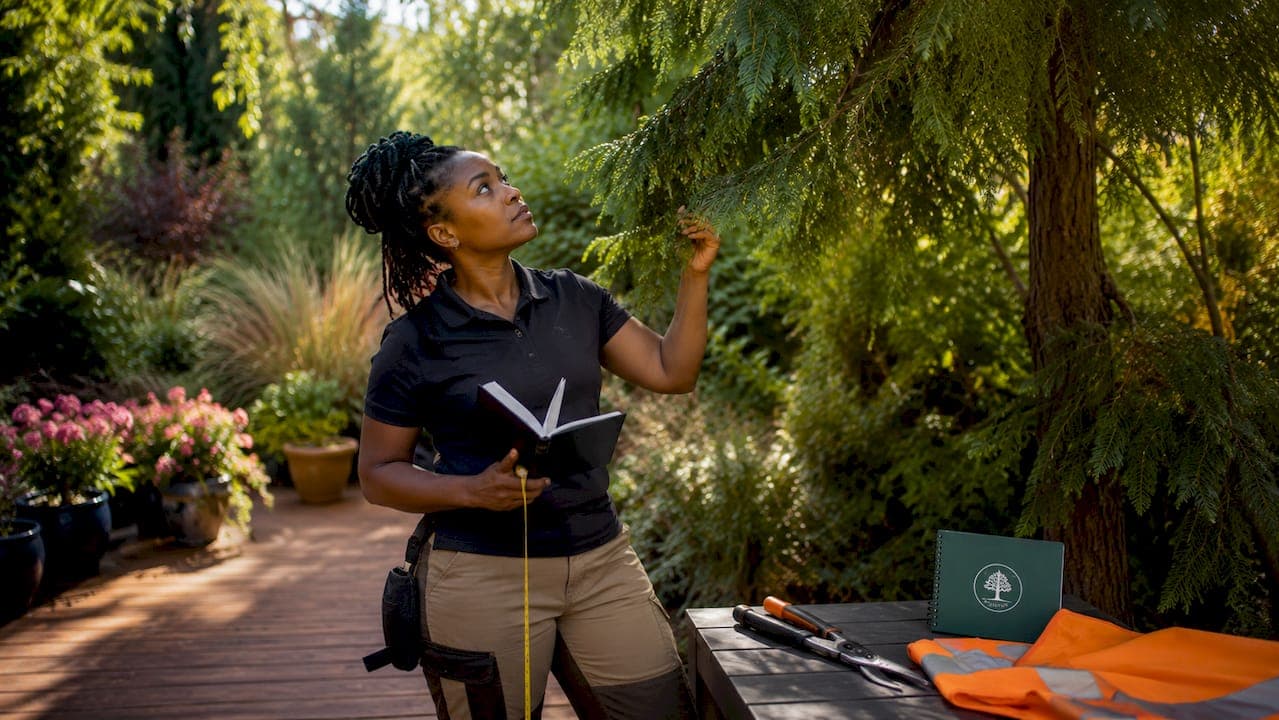
Pro Tip: Before you touch a single branch, walk the full perimeter of the tree and look up. Check for dead wood, leaning, and anything electrical within the fall radius.
1. Underestimating tree size and complexity
DIY tree removal is only realistic for trees under 15 feet tall, with no ladder required and a clear fall zone. Anything larger belongs in a different category entirely. The problem is that most homeowners look at a tree and think about height, not weight, root spread, or canopy load.
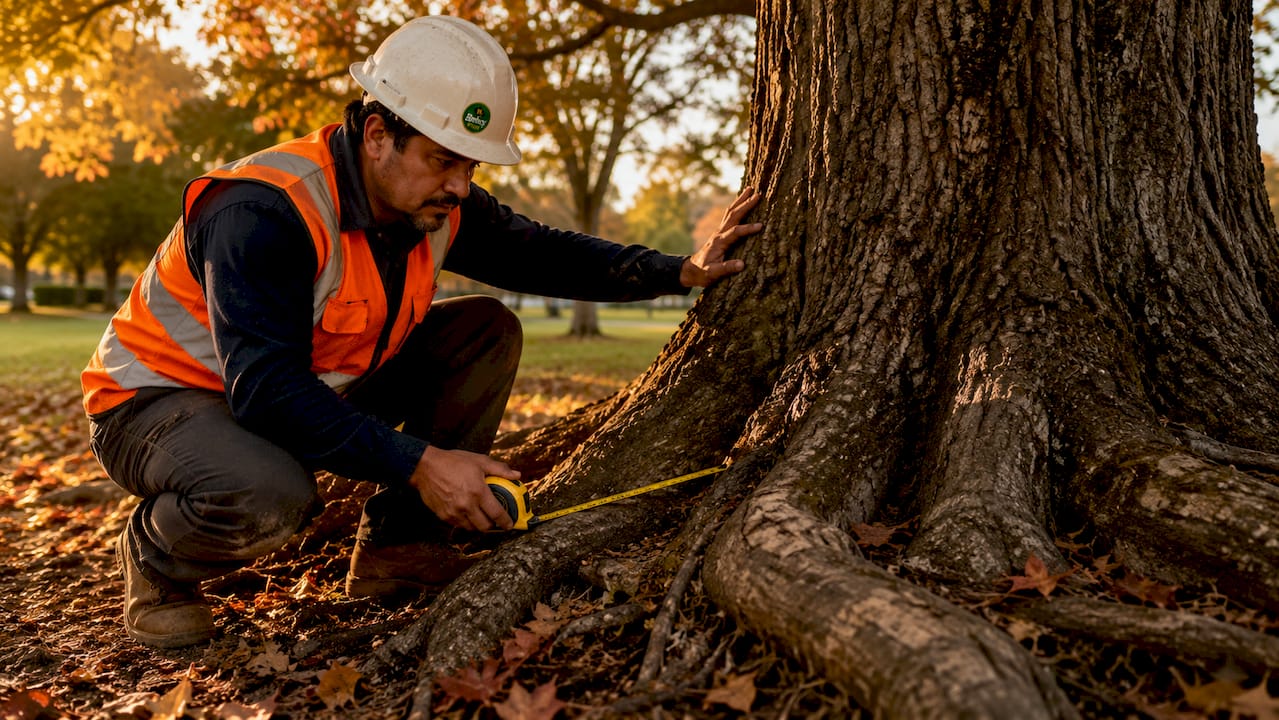
A large maple or oak can weigh a great deal. The trunk alone, once cut, becomes a rolling, unpredictable mass. Add a canopy full of wet leaves and the numbers climb fast. Misjudging that weight is one of the most common DIY tree cutting errors, and it usually shows up as property damage or a snapped rope.
Complexity compounds the size problem. A tree growing at an angle, or one with a heavy lean toward a fence or structure, requires rigging and directional control that most homeowners simply do not have the equipment or training to execute. When in doubt, consult a certified arborist before committing to the job.
2. Failing to assess tree health before removal
A healthy tree behaves predictably when cut. A diseased or structurally compromised tree does not. Rotten wood at the base or inside the trunk can cause the tree to fall before the final cut, or to split in a direction no one anticipated.
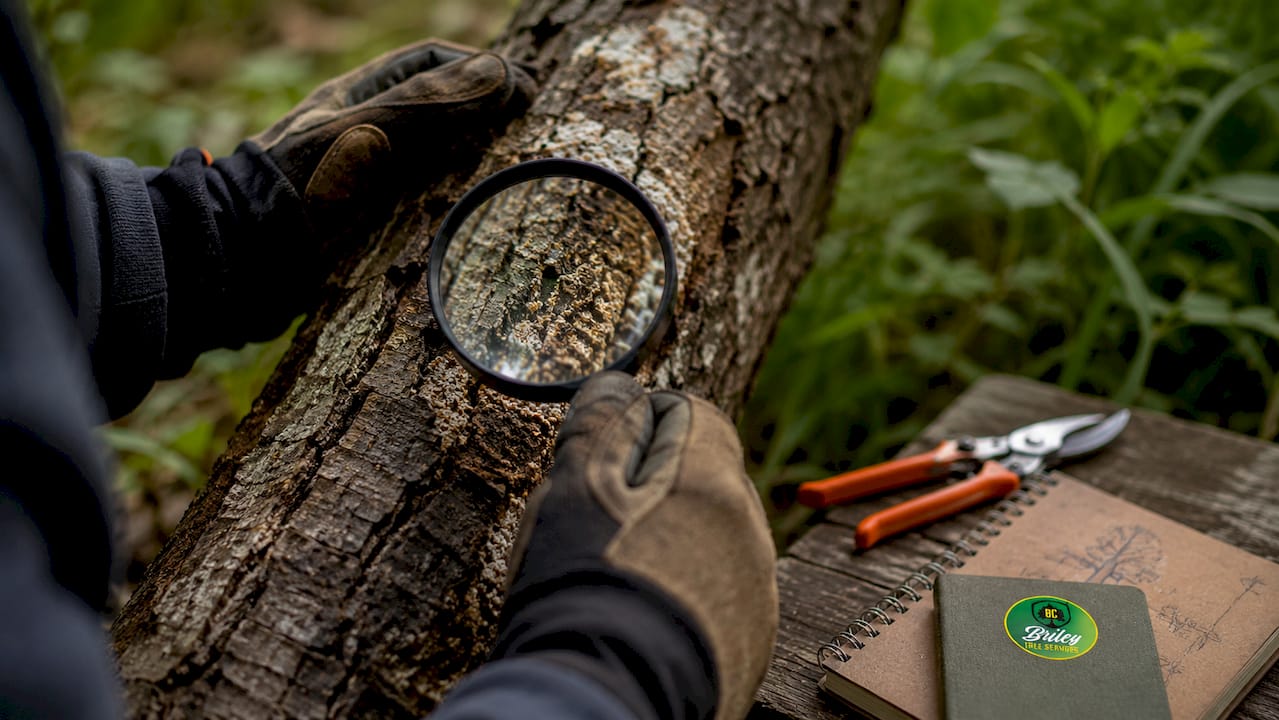
Signs of structural weakness include fungal growth at the base, cracks in the main trunk, dead branches throughout the canopy, and soft or hollow wood when probed. None of these are visible from a distance. You need to get close, look carefully, and know what you are looking at. If the tree has been stressed by drought, storm damage, or disease, its behavior under a saw becomes harder to predict.
This is where a professional assessment pays for itself. Arborists are trained to read tree structure and identify failure points before a cut is made.
3. Ignoring local permits and regulations
Tree removal is regulated in most American cities and counties. Some jurisdictions protect trees above a certain trunk diameter. Others require permits for any removal within a certain distance of a property line or public right of way. Skipping this step is one of the more overlooked common tree removal errors, and it carries real consequences.
If you remove a protected tree without a permit and a neighbor reports it, you can face fines, mandatory replanting requirements, or both. More critically, if your unpermitted removal causes damage to a neighboring property, your homeowner's insurance may deny the claim. Tree service liability is a real exposure for homeowners who skip the permit process.
Check with your local municipality or county office before any removal. The call takes ten minutes and can prevent a much larger problem.
4. Not planning the fall direction and hazard zone
Every tree removal starts with one question: where does this tree go when it falls? Answering that question requires more than a glance at the open yard. You need to account for the tree's natural lean, the weight distribution of the canopy, wind direction at the time of the cut, and every structure, vehicle, or utility within the fall radius.
A common mistake in tree felling is assuming the notch cut alone controls the fall. It does not. The notch creates a hinge, but the tree's lean and canopy weight have the final say. A tree with a heavy limb on one side will pull toward that side regardless of where the notch points.
Clear the fall zone completely before any cut begins. That means people, pets, vehicles, and anything else that cannot absorb a multi-ton impact. Mark two escape routes at 45-degree angles from the planned fall direction and use them the moment the tree starts to move.
5. Working near power lines
This is the mistake that kills people. Branches near power lines create an electrocution risk that no amount of rubber gloves or careful cutting can eliminate. You cannot tell by looking whether a line is live, and contact does not require touching the wire directly. A branch resting against a live line energizes the entire branch.
If any part of the tree you plan to remove is near a power line, stop. This applies to the trunk, the canopy, and any branch you might cut. The work requires specialized equipment, insulated tools, and coordination with the utility company. Attempting it without those resources is not a calculated risk. It is an unacceptable one.
For guidance on what safe clearance looks like, Brileytreeservice has detailed information on trimming near power lines that applies directly to this situation.
6. Using improper or faulty tools
The wrong tool does not just make the job harder. It makes it dangerous. Chainsaw kickback is one of the leading causes of facial injury in DIY tree work. It happens in a fraction of a second when the tip of the bar contacts wood unexpectedly, and it sends the bar upward toward the operator's face with no warning.
For small trees and branch removal, bypass loppers are the safer choice. They limit you to branches small enough to handle safely, keep your hands away from the cutting zone, and do not kick back. A sharp pruning saw is a reasonable tool for someone experienced with wood tension and cutting angles. A chainsaw in the hands of someone who uses it twice a year is a different situation entirely.
Tool condition matters as much as tool choice. Dull blades bind in wood, causing unexpected movement. Dirty cutting tools can transfer disease between trees. Clean and sharpen before every job.
7. Cutting branches in the wrong order
The sequence of cuts determines how much control you have over the tree's behavior at every stage. Cutting the wrong branch first can shift the tree's weight suddenly, bind the saw in the cut, or cause the trunk to split before you are ready.
The correct approach is to deconstruct the tree from the top down, removing all side branches first to turn the tree into a manageable pole. Once the canopy is cleared, cut the trunk in short sections from the top down. This method controls weight distribution at every step and prevents the unpredictable falls that come from trying to drop the whole tree at once.
Cutting from the bottom up, or removing large limbs without accounting for where they will fall, is how people end up with a saw pinned under a log or a branch through a fence.
8. Skipping safety gear and precautions
No helmet, no eye protection, no chainsaw chaps. This is the setup for a serious injury. Professional arborists wear hard hats, face shields, hearing protection, chainsaw-resistant leg protection, steel-toed boots, and heavy gloves on every job. The gear exists because the hazards are real and constant.
Branches whip back. Chips fly. Saws bind and twist. A single piece of bark moving at speed can cause permanent eye damage. A chainsaw that contacts a leg without protective chaps cuts through skin and muscle in the same instant. None of this is hypothetical.
The buddy system is equally non-negotiable. Never cut a tree alone. You need a second person on the ground to watch for falling debris and to call for help if something goes wrong. If you cannot reach 100% of the branches from the ground with both feet planted, the job has already exceeded safe DIY parameters.
9. Ignoring weather and environmental conditions
Wind is the variable most homeowners forget to account for. A 10-mph gust at the wrong moment can redirect a falling tree by several feet. Wet conditions add weight to the canopy, make footing slippery, and change how wood behaves under a saw. Cutting in rain or high wind is not a calculated risk. It is a preventable mistake.
Temperature matters too. Frozen wood is brittle and can crack unpredictably. Trees under drought stress have compromised wood structure that behaves differently than healthy timber. Check the forecast before scheduling any removal, and reschedule if conditions are not right.
Environmental factors extend beyond weather. Nearby gardens, irrigation lines, and landscaping features can all be damaged by a falling tree or by the equipment used to remove it. Brileytreeservice has practical guidance on protecting your garden during removal work that covers these considerations in detail.
10. Improper stump removal
Leaving a stump is a common oversight, but the methods homeowners use to remove stumps create their own set of problems. Attaching a chain to a stump and pulling with a truck is a frequent approach that can snap the chain, tip the vehicle, or send the stump flying when it releases from the ground. The forces involved exceed what most trucks and chains are rated to handle.
Stump grinding is the correct method for most situations. It removes the stump below grade without the mechanical risks of pulling. For small stumps, wetting the soil the day before and digging with hand tools is a reasonable alternative. Chemical stump removers work over months, not days, and are only appropriate when there is no urgency.
The root system also matters. Large trees have root networks that extend well beyond the trunk. Removing the stump does not eliminate the roots, and those roots can continue to affect drainage, nearby plantings, and underground utilities as they decay.
11. No emergency plan or first aid preparation
Tree removal is one of the more physically hazardous tasks a homeowner can attempt. Overlooking emergency procedures and clear escape routes significantly increases the severity of any accident that occurs. Yet most DIYers start cutting without a first aid kit nearby, without a designated escape path, and without anyone who knows where they are.
Before any cut, establish two escape routes at 45-degree angles from the planned fall direction. Keep a first aid kit within reach. Have a phone on your person, protected from impact. If you are working with a partner, agree in advance on what each person does if the tree moves unexpectedly.
If you are working alone, set a check-in time with someone who knows your location and what you are doing. This is not excessive caution. It is the minimum standard that professional crews apply to every job.
12. Overlooking nearby structures and utilities
A tree that falls onto a fence is a repair bill. A tree that falls onto a roof is a major claim. A tree that contacts a gas line is an emergency. Homeowners often focus on the tree itself and underestimate the radius of potential damage from a fall that goes even slightly off course.
Map every structure, utility, and obstacle within the full fall radius before the first cut. That includes underground utilities, which can be located for free by calling 811 before any digging begins. Above-ground hazards include fences, outbuildings, HVAC equipment, vehicles, and neighboring structures.
The cost of professional removal is almost always less than the cost of repairing what a misplaced tree can damage. For context on when large trees require professional intervention, Brileytreeservice covers the specific risks in detail in their large tree removal guide.
13. Skipping the alternative: trimming or professional consultation
Full removal is not always the right answer. A tree that is leaning, crowded, or producing dead wood may be a candidate for structural pruning rather than removal. Removing more than 15–25% of a mature tree's foliage in a single session stresses the tree, but targeted pruning within that threshold can address hazards without losing the tree entirely.
Topping, which involves cutting away the top portion of the crown to reduce height, is one of the worst pruning mistakes a homeowner can make. It permanently damages the tree's structure, encourages weak regrowth, and increases vulnerability to disease and storm damage. If size is the concern, a certified arborist can perform a proper crown reduction that addresses the problem without the long-term damage.
Before committing to removal, get a professional opinion. The consultation is usually free or low cost, and it may reveal that the tree can be saved with the right pruning approach.
14. Not cleaning up properly after removal
The job is not done when the tree hits the ground. Debris left in the yard creates hazards that persist long after the cutting stops. Branches on slopes can roll. Sawdust and wood chips make surfaces slippery. Large sections of trunk left in place become obstacles that are easy to trip over, especially in low light.
Proper cleanup also includes addressing the area where the tree stood. Exposed soil is vulnerable to erosion. The void left by a removed root system can create a depression that fills with water. If the tree was diseased, the debris should be disposed of carefully to avoid spreading the problem to other trees on the property.
Chip or haul away all debris the same day. Rake the area, check for any remaining trip hazards, and assess whether the soil needs attention before replanting or reseeding.
What do professional arborists say about safe DIY tree removal?
The professional consensus on DIY tree removal is consistent and clear: the margin for error is smaller than most homeowners expect, and the consequences of getting it wrong are disproportionate to any money saved.
Ladder accidents are a leading cause of injury in DIY home maintenance. The combination of managing cutting equipment and maintaining balance on a ladder, with unpredictable falling debris in the mix, creates a risk profile that professionals address with rigging systems and ground-based work. Homeowners typically have neither.
Chainsaw use is another area where professional caution is consistent. Arborists who work with chainsaws daily still treat them as high-risk tools requiring full attention and proper technique. The kickback risk alone is enough reason for most homeowners to reach for bypass loppers instead. Flush cuts are a related concern: cutting a branch flush to the trunk removes the branch collar, the tissue responsible for wound closure, and exposes the tree to pests and disease through an open wound that cannot heal properly.
Brileytreeservice serves homeowners throughout Shreveport, Bossier City, and Northwest Louisiana with professional tree removal, trimming, and stump grinding. The team brings the equipment, training, and insurance that DIY removal cannot replicate. For trees that exceed safe DIY parameters, or for any situation involving power lines, large trunks, or structural hazards, a professional assessment is the right first call.
Contact Brileytreeservice for a free estimate and get a clear answer on whether your tree is a safe DIY candidate or a job for the professionals.
Key Takeaways
DIY tree removal is only safe for trees under 15 feet tall, with no ladder required, a clear fall space, proper tools, and an accompanying person present.
| Point | Details |
|---|---|
| Size determines safety | DIY removal is only appropriate for trees under 15 feet tall, as long as no ladder is needed and there is a clear fall zone. |
| Power lines are non-negotiable | Any branch within 10 feet of a power line requires a professional, not a homeowner with a saw. |
| Sequence controls the fall | Remove all side branches first to create a pole, then cut the trunk in short sections from the top down. |
| Pruning limits protect the tree | Never remove excessive foliage of a mature tree in a single session to avoid stress and decline. |
| Emergency prep is required | Establish two escape routes, keep a first aid kit nearby, and never cut alone before any removal begins. |
The real cost of underestimating a tree
The most persistent misconception in DIY tree removal is that owning a chainsaw is the same as knowing how to use one safely. Arborists identify this gap as the root cause of most accidents and property damage in residential tree work. The tool is not the skill.
What homeowners consistently underestimate is not just the physical weight of a tree, but the number of variables that have to go right simultaneously: the fall direction, the wood condition, the tool behavior, the footing, the weather, and the reaction time required when something moves unexpectedly. Professional crews manage those variables through training, equipment, and redundancy. A homeowner working alone manages them through luck.
The financial math also tends to work against DIY removal once the full picture is considered. A tree that damages a neighbor's fence, a vehicle, or a structure can cost far more to repair than a professional removal would have cost in the first place. Insurance coverage is not guaranteed when damage results from unpermitted or negligent work. The savings evaporate quickly.
What I find most overlooked in the conversation about DIY tree removal is the alternative that sits between "do it yourself" and "hire someone immediately." A free consultation with a certified arborist often reveals that the tree does not need to come down at all, or that targeted pruning within safe limits addresses the actual concern. Homeowners who skip that step and go straight to removal sometimes remove trees that could have been saved, and sometimes attempt removals that should never have been DIY projects. Getting that assessment first costs nothing and changes the entire decision.